Home / Courtroom
Courtroom
Lawsuits and rulings reshaping fashion, decoded.
A Pin Collector's Contract Clause Could Reshape AI Ad Liability
A new federal lawsuit over an AI-altered Facebook ad tests whether an explicit no-AI clause in a creator contract beats the broad releases that have protected brands so far, and it pulls Meta's own ad-automation tools into the frame.
ChatGPT Now 'Try On's Your Designs. Nobody Asked You.
OpenAI's new virtual try-on tool turns any screenshot of your garment into raw material for an AI image generator, with no license, no attribution, and no mechanism to say no.
Shein's AI Design Pipeline Faces a Racketeering Test in Court
A refiled class action argues Shein's algorithmic trend-scraping isn't just copyright infringement, it's a pattern of racketeering. A ruling on Shein's motion to dismiss is pending, and if the theory survives, every AI-driven copying pipeline gets more exposed.
Minnesota's AI Nudification Ban Faces Its First Real Test
The first law making AI companies directly liable for nudification tools took effect August 1. xAI's constitutional challenge now heads toward an August 19 hearing that could reshape the playbook for deepfake liability.
NY Court Lets Rainbow Shops Keep Using AI Model Images
A judge's refusal to block AI-altered ads of model Francheska Pujols shows how far a broadly worded release can stretch, and why every independent model needs to read the fine print before signing.
Pujols v. Rainbow Shops: The AI Likeness Case Rewriting the Model Release
A model says Rainbow Shops used AI to put her face in scenes she never shot. The retailer says her 2024 release already allowed it, and a judge has let the images stay up while the fight plays out. The whole story, in one place.
Influencer's AI Deepfake Suit Against EBY Tests Creator Rights
A body-positive influencer says a lingerie brand used AI to alter her own content into a nonconsensual deepfake. The case will help define what independent creators can actually control in their contracts.
Stability AI Named in Deepfake Suit: A Warning for Fashion Brands
An amended complaint adds Stability AI as a defendant in a CSAM deepfake case, and the reasoning threatens every brand relying on open-weight image tools for catalog work.
AI 'Whitewashed' a Black Model: A New Kind of Bias Claim
A Nigerian-Australian model says a menswear brand used AI to lighten his skin and reshape his features. The complaint tests whether bias law, not just publicity law, is the right tool for AI-altered ad imagery.
When AI Retouching Lightens Skin: A Model's Discrimination Claim
A menswear brand used AI to reshape a Black model's nose and skin tone. His complaint tests whether AI photo editing can trigger discrimination law, not just image rights.
AB 2013 Explained: California's New AI Training Data Law
California now requires AI developers to disclose what their models were trained on. Here's what that means for designers who use, or build, AI tools.
Counterfeit vs. Dupe: The Legal Line That Actually Matters
A dupe and a counterfeit are not the same thing in the eyes of the law, and the difference decides whether someone gets a cease-and-desist or a criminal charge.
What Actually Protects a Handbag
Trademark, trade dress, and design patents each cover a different slice of a product. Knowing which is which is the whole game in a dupe fight.
When Is a Dupe Actually Illegal?
Most dupes are legal. The ones that aren't cross three specific lines: trademark, trade dress, and design patents.
Who Owns You? What the SXSW Creator NIL Conversation Means for Fashion Designers
A Texas attorney told SXSW 2026 that creator identity is now the most vulnerable asset in the AI economy. Independent designers are in that conversation whether they know it or not.
Every Copyright Lawsuit Against an AI Company, Mapped, via ChatGPTiseatingtheworld.com
One hundred US cases and counting. One visual that tells you exactly where the law is being made, and what it means if you're a designer whose work might be in someone's training set.
California's AI Laws for Fashion: AB 2602, AB 1836, and What Comes Next
California has built the most detailed AI framework in the country, from digital replica consent to watermarking mandates. Here's exactly what it requires and how it interacts with New York's rules.
Your Designs Are Probably in an AI Training Dataset. Here's What That Means.
LAION-5B, Common Crawl, and other datasets used to train major AI models contain scraped fashion imagery. The legal framework is unsettled, but there are things you can do now.
FTC Disclosure Requirements for AI-Generated Fashion Content
There is no single federal 'AI label' law. There is something older and sharper: the FTC's deception authority. Here's what fashion brands actually need to disclose and how.
Who Owns an AI-Generated Fashion Design? Copyright in the Age of Generative Tools
The US Copyright Office has answered most of this question. Fashion brands and designers using generative tools need to understand what's protectable and what isn't, before someone else copies your work.
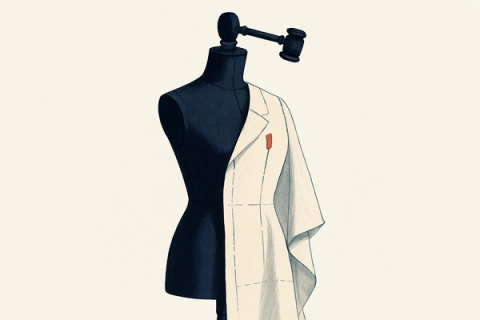
New York's Synthetic Performer Law: What It Means for Fashion Shoots
New York has made AI models a legal issue, not just an ethical one. Here is the exact scope of the new disclosure law, how it fits with the Fashion Workers Act, and what your model contracts need to say.
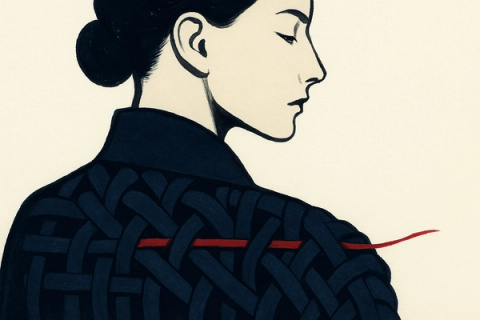
The EU AI Act: What Every Independent Designer Needs to Know
The world's most comprehensive AI regulation has extraterritorial reach and a countdown clock. Here's the complete playbook for brands selling into European markets.