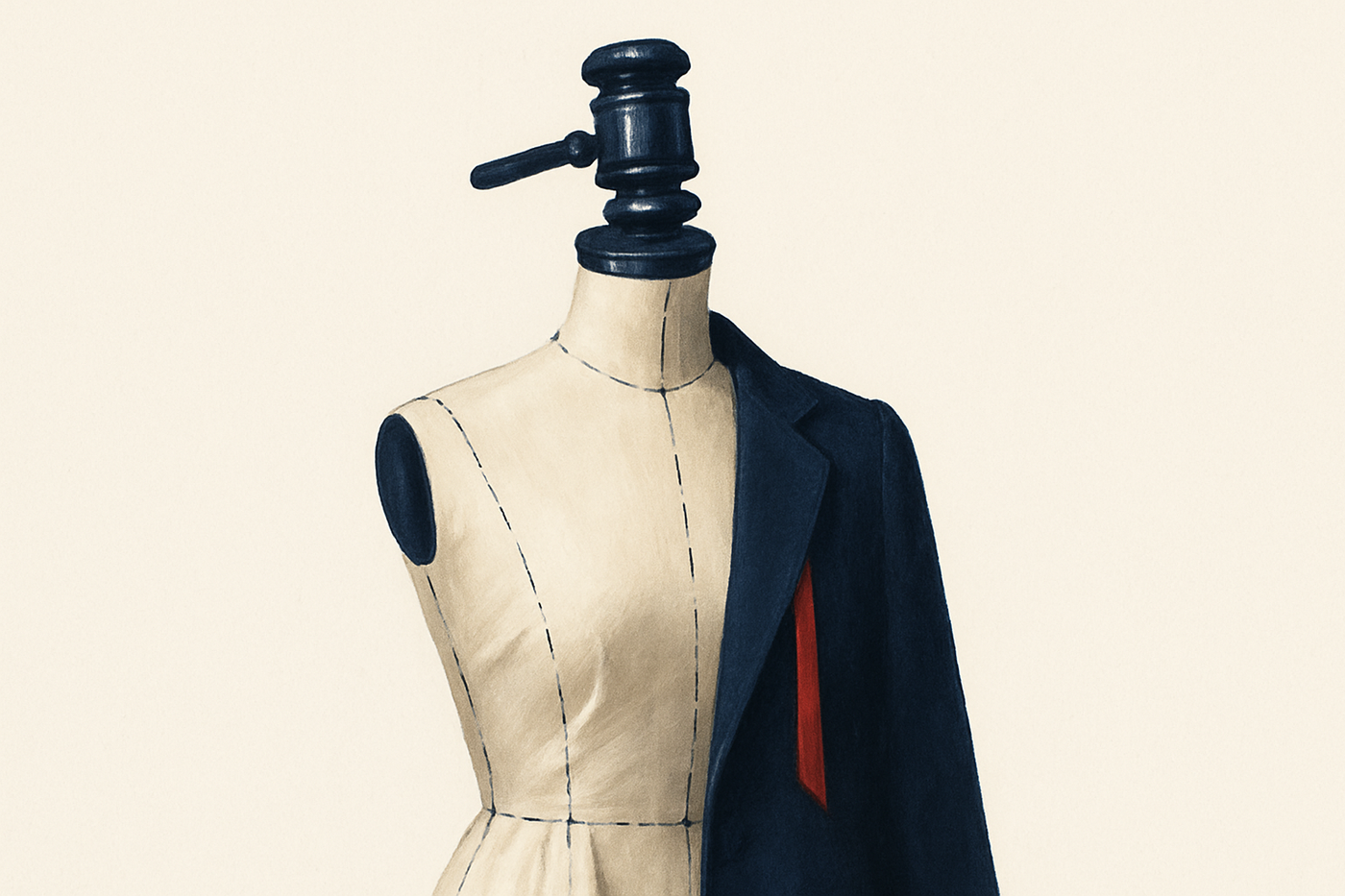
The imagery your brand has published since its founding, every runway photograph, every lookbook, every editorial feature, every campaign, has almost certainly been incorporated into AI training datasets. LAION-5B, the training dataset underlying Stable Diffusion and several other major AI image models, contains approximately 5.85 billion image-text pairs scraped from the public internet. Fashion imagery is significantly represented.
This happened without notification, without consent, and without compensation. Whether it was legal is currently being decided in courts in the US, UK, and EU. Whether you can do anything about what has already happened is a harder question. What you can do going forward is the practical focus of this piece.
The live litigation: what the cases are arguing
Several major cases will shape the legal status of AI training on copyrighted imagery. The ones most directly relevant to fashion designers, all of which I follow on the litigation map:
Andersen v. Stability AI (N.D. Cal.). Filed by visual artists whose work appears in the LAION dataset, against Stability AI, Midjourney, and DeviantArt. The core copyright infringement claims survived motions to dismiss and are headed for trial, but not soon: a June 15, 2026 order reset jury trial to September 20, 2027, with class certification and dispositive motions due June 2, 2027. A third amended complaint was filed in February 2026. Some of the original claims, including the DMCA claims about stripped copyright management information, were dismissed along the way. The artists are also seeking class certification. This is the closest thing visual creators have to a bellwether.
Getty Images v. Stability AI (N.D. Cal.). Getty alleges Stability used millions of Getty images without licence to train Stable Diffusion, asserting copyright, trademark, and related claims, including over AI output that replicated Getty's watermarks. Getty originally filed in Delaware in 2023, then refiled in California in August 2025, where the case survived a motion to dismiss in part in April 2026 and is proceeding.
The UK parallel case has already produced a judgment, and it was a hard lesson. In November 2025, the High Court ruled largely for Stability. Getty had to abandon its core training claims mid-trial because it could not show the training happened in the UK, and it won only extremely limited findings on trademark infringement relating to watermarks in early Stable Diffusion versions. Getty has been given permission to appeal. The takeaway for the rest of us: where the training physically happened matters enormously, and proving it is hard.
European courts are testing a different framework. In Kneschke v. LAION), German courts held in 2024 and again on appeal in 2025 that LAION's dataset-building was covered by the text and data mining exceptions in the EU copyright directive. EU outcomes may well diverge from US outcomes, and the EU's opt-out mechanism puts more of the burden on rights holders. That matters for the technical steps below.
The central legal question in the US cases: does training an AI model on copyrighted images without permission constitute copyright infringement? The defendants' primary argument is fair use. The plaintiffs' primary argument is that training creates competing products that harm the market for the original work.
Is compensation actually possible?
I used to get asked whether any of this litigation would ever produce money for creators. Now there's an answer. In Bartz v. Anthropic, a class action by book authors over pirated training books, Anthropic agreed in 2025 to pay $1.5 billion, roughly $3,000 per covered work. It's the largest copyright settlement in US history. Final approval was granted on July 20, 2026, and two appeals are now pending in the Ninth Circuit, so payment is not immediate. Books are also not fashion photographs. But the settlement established that training-data claims can carry a very large price tag, and that changes negotiating dynamics across every creative industry.
The related implication for fashion brands: if you have substantial photography archives, extensive runway documentation, large campaign libraries, they may have licensing value in AI training contexts that did not exist three years ago. Licensing deals between archives and AI companies are already being struck. Your archive is an asset. Treat it like one.
The output infringement question
Separate from the training question is whether AI-generated output that closely resembles copyrighted material itself infringes. This is particularly relevant for fashion brands with distinctive visual identities.
If a competitor uses an AI tool to generate designs that closely replicate your distinctive aesthetic, patterns, or visual identity, you may have both copyright and trade dress claims. Several brands are actively monitoring AI output for similarities to their IP and building documentation for potential claims. The foundational framework is in AI Copyright and Authorship.
What you can do right now
Register your key copyrights. For US works, registration (or a refusal) is required before you can file an infringement suit at all, and statutory damages are generally available only if you registered before the infringement or within three months of publication. Registration is inexpensive: the Copyright Office's basic filing fees run $45 to $65 per application. It creates a timestamped public record and significantly strengthens your position in any dispute.
Implement technical opt-out measures. Update your robots.txt to block AI training crawlers, and register your work with opt-out services like Spawning's Have I Been Trained. A basic robots.txt block looks like this:
- `User-agent: CCBot` / `Disallow: /`
- `User-agent: GPTBot` / `Disallow: /`
- `User-agent: anthropic-ai` / `Disallow: /`
Honest caveat: the legal force of these opt-outs is not established in the US, and they do nothing about what's already in training datasets. In the EU, though, a machine-readable opt-out is exactly what the text and data mining exception contemplates, so this step has real teeth there. Either way, it is a reasonable protective measure, not a guaranteed shield.
Document the originality of your work. In any future dispute, you'll need to demonstrate original human creative expression. Keep your sketches, mood boards, material explorations, and the reasoning behind key decisions. My provenance toolkit walks through a documentation system that takes minutes per design, not hours.
Monitor for visual similarity in AI output. For brands with distinctive visual identities, periodic checks of major AI image platforms for outputs that closely replicate your aesthetic are worthwhile. Detection tools are improving fast; I keep a current list in tools.
Put AI training restrictions in your photography contracts. New photography and content agreements should include explicit prohibitions on use of the imagery for AI training, a representation that the photographer has not submitted your imagery to training datasets, and ownership provisions that make the brand's rights, including AI-related rights, unambiguous.
One more lever worth knowing: transparency laws are starting to force disclosure of what's in training data. California's AB 2013 now requires developers to publish summaries of their training datasets, which I break down in my AB 2013 explainer. You cannot un-train a model on your past work. But the legal question of whether that training was infringement, and whether compensation is owed, is being actively litigated, and the outcome will have significant consequences for fashion's relationship with AI tools. I update the state of play on the tracker.
This article is editorial analysis, not legal advice. For questions about your specific situation, consult a qualified attorney.